
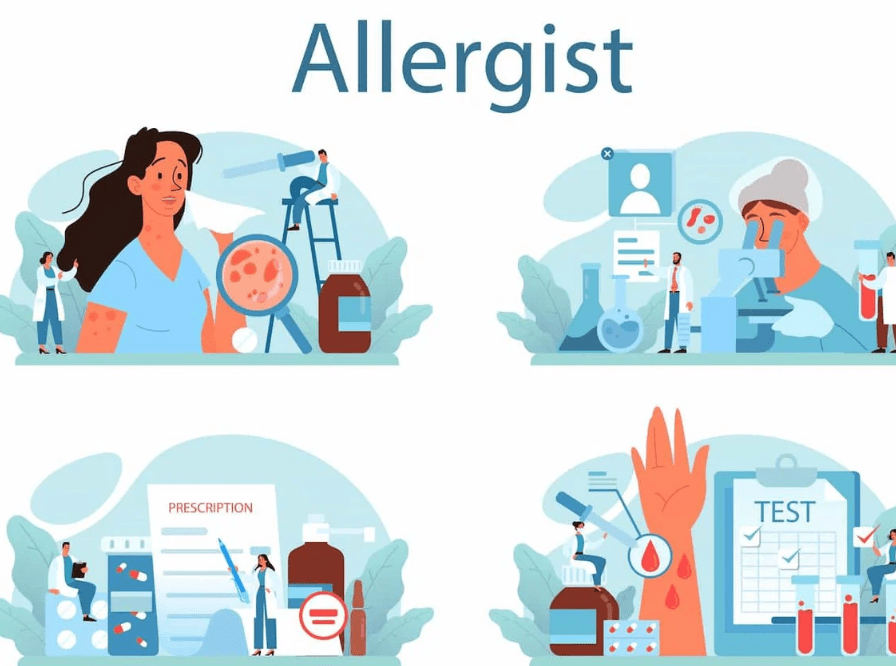

I know firsthand that talking to your doctor about food allergies can feel very overwhelming. Whether you’re newly diagnosed, managing a long-term allergy, or suspect you have one, knowing the right questions to ask can make your appointment more productive and less stressful.
Here’s a guide and some tips on questions to ask to help you prepare and get the most out of your doctor visits!!
- What tests will you use to diagnose or confirm my food allergies?
Understanding and asking what tests (for example, skin prick, blood tests, oral food challenges) are needed to help you know what to expect and how accurate the diagnosis is. - Can my allergies change over time?
Ask if your allergy is likely to be lifelong or if you might outgrow it. Knowing this helps with long-term planning. - How severe is my allergy, and what symptoms should I watch for?
Get clear information on what kinds of reactions you might have, from mild to severe or anaphylactic, so you know when to seek emergency care. - What should I do if I have an allergic reaction?
Ask about when and how to use medications like antihistamines and epinephrine (EpiPen). Clarify when you need to call 911 or go to the ER. - How can I avoid accidental exposure?
Discuss tips for preventing cross-contact at home, school, work, and when eating out. - Should I carry an epipen? How many and when?
Learn the best practices for carrying, storing, and using your EpiPen or other emergency medication. - Are there any new treatments or therapies I should consider?
Ask about options like oral immunotherapy (OIT), SLIT, and food challenges or if you want to explore treatment beyond avoidance. - How can I talk to my family, friends, and coworkers about my allergies?
Doctors can give advice on how to educate your support system to keep you safe.
Additionally, when meeting a doctor to speak about allergies, make sure to bring a list of your symptoms and any questions before your visit. Also, be honest about your lifestyle and any past allergic reactions, and don’t be afraid to ask for clarification if something is confusing.
Finally, remember that you are your best advocate when it comes to your health. Preparing ahead with these questions will help your doctor understand your needs and guide you toward safer, more confident management of your food allergies. Remember you’ve got this!!!
 Behind The Label
Leave a comment