
When you have food allergies, traveling abroad can feel like stepping into the unknown—especially if you don’t speak the language. Telling servers at your local restaurants is hard enough, but a language barrier makes it even worse. You’re already navigating new foods, unfamiliar customs, and different allergy labeling laws, and the last thing you want is a miscommunication about your allergy.
That’s where food allergy cards come in. Small, powerful tools that can literally be life-saving.
What Are Food Allergy Cards?
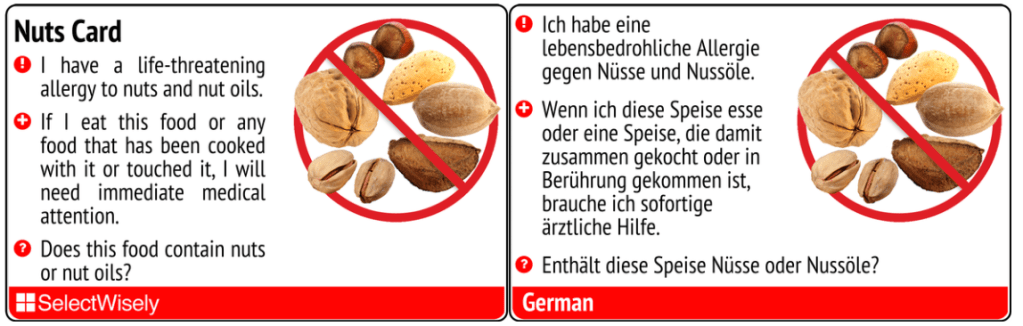
Food allergy cards are wallet-sized cards that clearly state your allergies in the local language of the country you’re visiting. You can show them to servers, chefs, or food vendors to help ensure that your meal is safe.
They usually include:
- A clear list of your allergens
- A statement like “I have a severe allergy. If I eat this food, I could go into anaphylactic shock.”
- A polite but direct request like “Please make sure my food does not contain or come into contact with these ingredients.”
Below is an Example with the left in English and right in German.
Why they are so important when traveling:
Language barriers can make explaining your allergy nearly impossible in some situations. Additionally, labeling laws vary widely from country to country. Not every place has strict labeling like the U.S.
In some countries, food allergies may not be taken as seriously or might be confused with dietary preferences that are not life-threatening. Also, you might not know how a dish is traditionally prepared in other countries compared to how it is done in the USA. For example, almond paste is popular in many European desserts. A well-written allergy card in the local language can prevent dangerous mix-ups and help others take your allergy seriously.
When to Use Them:
– At restaurants or cafés
– At food markets or street vendors and show the card before you even ask about the food.
– In hotel kitchens or buffets. Also, ask the staff to speak with the chef using your card.
– On flights. Show the card to the flight attendant when receiving meals or snacks.
Where to Get Them
– AllergyTranslation.com, which offers customizable allergy cards in 40+ languages.
Finally, an important tip whenever travelling is to print at least 3–5 copies of your card before you leave on your trip, just in case some get lost or kept by the chefs. Carry one in your wallet, one in your day bag, and stash an extra in your suitcase. So, if one gets lost or damaged, you’ve got backups.
So, whether you’re ordering Pasta in Italy, a croissant in France, or sushi in Japan, a food allergy card gives you the voice you need to communicate, even if you don’t speak the language. It’s a small piece of paper with the power to give you freedom, safety, and peace of mind!!
 Behind The Label
Leave a comment