


As someone with food allergies, one thing I always do before eating something is reading the food label and ingredients list thouroughly. Reading these food labels are a critical part of avoiding allergens and preventing allergic reactions.
Reading a food label for allergens is completely different from what you and others might be used to. It is more than just looking at the protein, carbs, salt, trans fats, and calorie count. Instead, for food allergies, the ingredient list and any warning labels are the most important. However, packaged and processed foods often contain many ingredients and sometimes they are not labelled in a straightforward way. This can make reading food ingredient labels difficult and it may be hard to know how a particular ingredient relates to your allergy.
Here are some things to know, tips, and tricks to read these food allergy labels like a pro!
- What allergens must be listed in the USA
The way allergens are listed in the USA compared to other countries differ as in the U.S., the FDA requieres for the top 9 allergens to be clearly listed on food packages.
The top 9 are:
- Milk
- Eggs
- Peanuts
- Tree nuts (like almonds, walnuts, cashews)
- Fish
- Shellfish/Crustaceans
- Wheat
- Soy
- Sesame
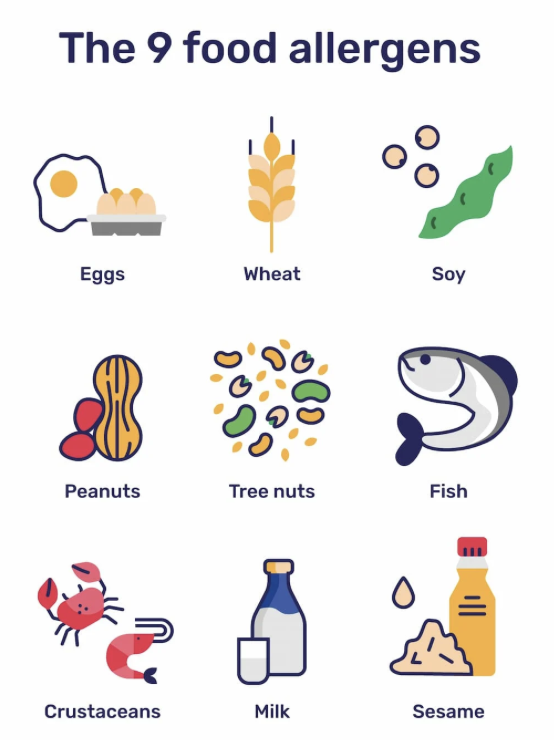
These 9 allergens must be listed in the ingredients list or stated in a contains or may contains section below the ingredients list. Heres an example in a picture.
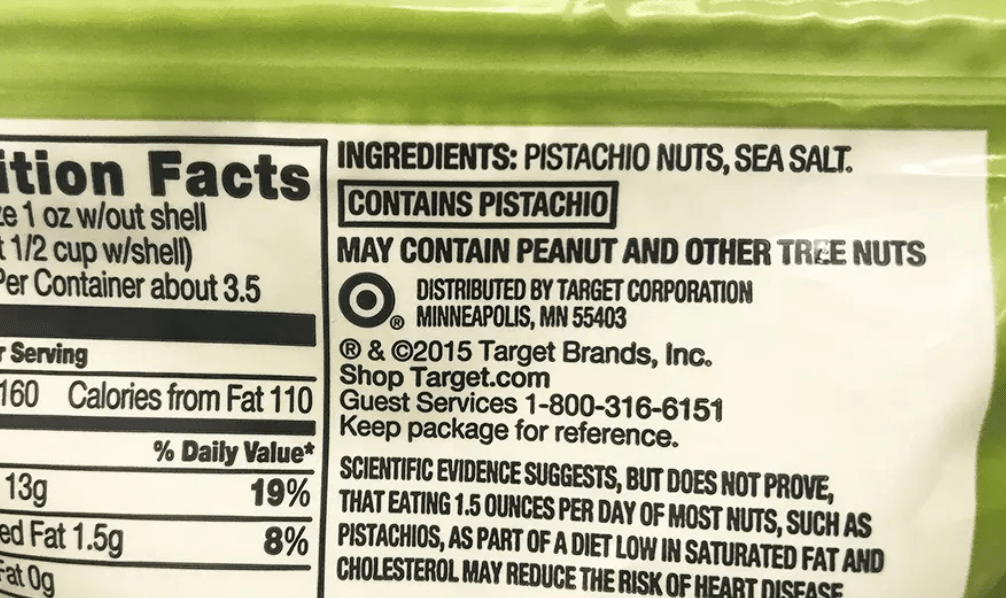
Contains: Pistachio
May Contain: Peanut and other tree nuts
2. May Contain vs. Processed in a Facility
For those with food allergies like me, one of the most confusing things on labels are the voluntary food warnings.
May contain peanuts means that the product might have trace amounts due to shared equipment.
Processed in a facility also means that there’s a risk of cross-contact, but usually less direct than may contain.
However, these warnings aren not regulated the same way that Contains statements are. Companies aren’t required to include them, and there’s no standard way to phrase them.
The bottom line when dealing with these food labels is that if you’re unsure or the allergy is very severe, to just fully avoid it or contact the brand.
3. Know that food label rules aren’t always the same in other countries
Another thing to know about food allergies is that if you’re traveling or buying imported foods, do not assume that the same rules apply.
For example, the UK and EU require labeling for 14 allergens, including celery and mustard, Canada has different wording, and sesame wasn’t always required until recently. Also, some countries have no labeling rules at all!
So, if you’re traveling, it’s smart to carry food allergy translation cards and always properly communicate with the chef and server (more on that in another post!)
So, remember, before buying or eating something, ask yourself:
- Is my allergen listed directly?
- Is there a “may contain” or cross-contact warning?
- Do I need to call the company to double-check?
- Is this from a country with different labeling laws?
All in all, with the proper knowledge, skills, and tools, when reading food packaging labels, there is nothing to worry about! Reading labels is not just a habit, it’s a life skill when you live with food allergies. Once you get used to it, you’ll start spotting red flags instantly. It may feel overwhelming at first, but you will learn what to trust, when to ask, and how to stay safe without missing out!!
 Behind The Label
Leave a comment